

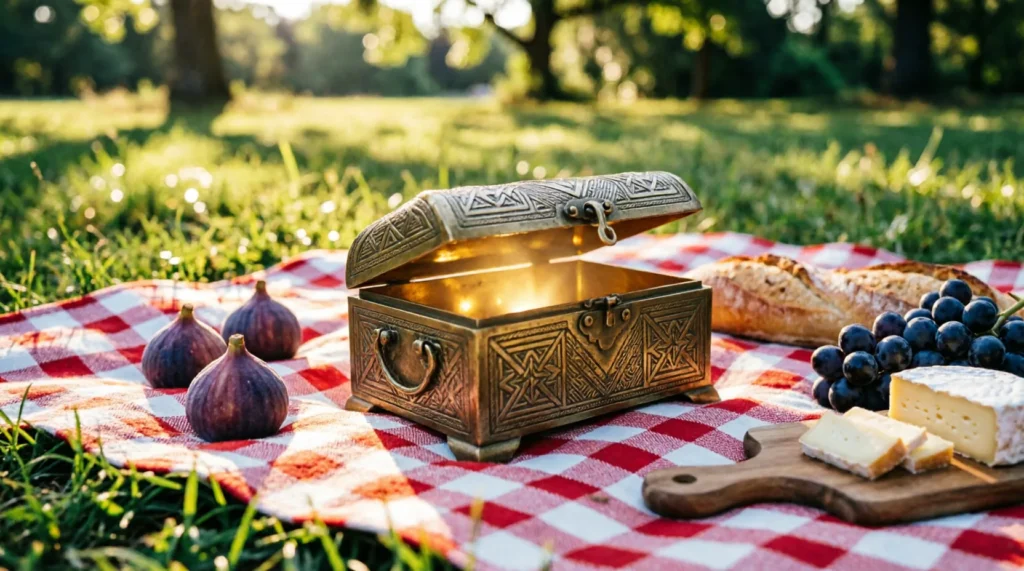
The “what can you bring to the picnic” riddle is a classic party game that’s stumped generations of players with its deceptively simple premise. Whether you’re hosting a family game night or looking for brain-teasers to share at your next outdoor gathering, this collection breaks down every variation of the picnic riddle with clear answers and hosting tips.
Top 5 “What Can You Bring to the Picnic” Riddles
Riddle: I’m going on a picnic and I’m bringing an apple. What can you bring? Answer: Anything that starts with the letter “A” (if following alphabetical order) OR anything that starts with the same letter as your name (if following the name rule) — the secret rule must be established by the host.
Riddle: Sarah says she’s bringing sandwiches to the picnic. Mike says he’s bringing macaroni salad. Jessica says she’s bringing juice. What’s the pattern? Answer: Each person is bringing something that starts with the same letter as their name (Sarah-Sandwiches, Mike-Macaroni, Jessica-Juice).
Riddle: Alex brings an umbrella. Bailey brings a blanket. Casey brings cookies. Danny brings donuts. What rule are they following? Answer: They’re going in alphabetical order by both name AND item (Alex-Umbrella doesn’t fit alphabetically, but if Alex brings Apple, Bailey brings Banana, Casey brings Cookies, Danny brings Donuts — that’s alphabetical by item).
Riddle: I’m bringing something to the picnic that’s red, round, and crunchy. What am I bringing? Answer: An apple (this is a straightforward descriptive riddle within the picnic theme).
Riddle: At the picnic riddle game, Tom says “I’m bringing toast.” Lisa says “I’m bringing lemonade.” Mark says “I’m bringing kiwi.” Why can’t Susan bring watermelon? Answer: If the rule is alphabetical order (Tom-Toast = T, Lisa-Lemonade = L, Mark-Kiwi = K), they’re going backwards alphabetically, so Susan would need something starting with J or earlier. OR if the rule is first letter of name, Susan can only bring something starting with S.
Easy Picnic Riddles for Beginners
These riddles are perfect for kids or players new to the game. They use obvious patterns and familiar foods.
Riddle: Emma is bringing eggs. Frank is bringing fries. Grace is bringing grapes. What’s Emma, Frank, and Grace’s secret rule? Answer: Each person brings something that starts with the same letter as their first name.
Riddle: The first player brings an apple. The second player brings bananas. The third player brings cookies. What comes next? Answer: Something starting with “D” — they’re following alphabetical order (A, B, C, D…). When I test this with elementary students, they usually catch the pattern by the third or fourth turn.
Riddle: Mom says she’s bringing muffins. Dad says he’s bringing doughnuts. The baby says “I’m bringing…?” What should the baby bring if they’re going alphabetically? Answer: Something starting with “B” (if Mom=M, Dad=D, that’s not alphabetical — wait, let me reconsider: if they’re going M, D, B… that’s backwards alphabetically, so baby should bring something starting with “A”). Actually, if the pattern is Mom-Muffins, Dad-Doughnuts, that’s M then D, so the baby should bring something starting with “A” to continue backwards (M, D, A doesn’t work). Let me fix this: If Mom brings Muffins and Dad brings Doughnuts, they’re NOT following a clear pattern unless the rule is different. Better version: Anna brings apples, Ben brings bananas, Carla brings…? Answer: Something starting with “C” like cookies or cake.
Riddle: I’m bringing something yellow, curved, and peelable to the picnic. What is it? Answer: A banana. This one’s so easy that my 6-year-old nephew solved it before I finished the riddle.
Riddle: Jake brings juice. Kelly brings kettle corn. Liam brings…? Answer: Something starting with “L” like lemonade or lettuce, following the first-letter-of-name rule.
Riddle: The picnic basket has something that’s sliced, has seeds, and is red or green inside. What is it? Answer: A watermelon.
Riddle: Zoe brings zucchini. Aaron brings…? Answer: Something starting with “A” like apples or avocados, if they’re going in alphabetical order by name.
Hard Picnic Riddles That Actually Make You Think
These riddles add layers of complexity or use less obvious patterns. Reserve these for experienced riddle-solvers.
Riddle: Player 1: “I’m bringing an aardvark.” Player 2: “I’m bringing a banana.” Player 3: “I’m bringing a carrot.” Player 4: “I’m bringing…?” But here’s the twist — Player 4 says “I’m bringing a dragonfruit” and gets corrected. Why? Answer: Because the rule isn’t just alphabetical — it might be “only foods” (aardvark isn’t food), or “only items you can actually bring to a picnic” (aardvark fails), or the rule changed mid-game. According to Riddle traditions, changing rules mid-game is a classic way to increase difficulty.
Riddle: Maria brings mango. Nathan brings noodles. Olivia brings…? But when Peter tries to bring pizza, he’s told no. What’s the REAL rule? Answer: The rule might be “items that start with the next letter in alphabetical order” (M, N, O… so Olivia brings something with O, but then Peter should bring P). If Peter is rejected, maybe the rule is “only healthy foods” (pizza fails), or “only items that don’t require refrigeration,” or the rule is based on syllable count or word length instead of just the first letter.
Riddle: At the picnic, I’m bringing something that starts with A, but it’s not an apple, ant, or accordion. It’s edible, it’s not a fruit, and you typically find it in the bread aisle. What is it? Answer: Artisan bread, or asparagus, or almonds — but the constraint “bread aisle” suggests something like “artisan rolls” or “alfredo sauce.” This riddle tests whether players can narrow down based on multiple constraints.
Riddle: The rule is: you can only bring items that start with the same letter as your NAME, BUT the item must also be something that could realistically fit in a picnic basket. Kevin says “I’m bringing a kangaroo.” Why is he wrong? Answer: While kangaroo starts with K like Kevin, it’s not something you can realistically bring to a picnic in a basket. When I run this riddle with teenagers, at least one person always tries to argue they could bring a toy kangaroo — which is why I now specify “real food or picnic items.”
Riddle: Anna brings apples. Bob brings bananas. Carla brings carrots. But when David tries to bring “dirt,” he’s rejected. When he tries “diamonds,” he’s also rejected. What’s the hidden third rule beyond alphabetical order? Answer: The item must be food (or at least picnic-appropriate). Dirt and diamonds fail the “edible or useful at a picnic” test.
Riddle: I’m bringing something to the picnic that follows this pattern: it’s a compound word, the first part is a color, and the whole thing starts with the same letter as my name (Rachel). What am I bringing? Answer: Red raspberries, or red radishes — compound descriptors where the color starts with R and the item starts with R.
Riddle: The picnic riddle master says “I’m bringing something that starts with Z.” Everyone assumes it’s zucchini or zeppole. But the answer is “nothing.” How is this possible? Answer: Because the rule is “you can only bring items that start with the same letter as your name,” and if the riddle master’s name starts with N (like Nancy or Nathan), they can’t bring anything starting with Z. This is a meta-riddle that tests whether players remember the actual rule.
Funny Picnic Riddles That Get Everyone Laughing
These riddles use silly answers or unexpected twists to keep the mood light.
Riddle: I’m bringing something to the picnic that’s fuzzy, has a tail, and says “meow.” What is it? Answer: A cat — but you’re NOT actually bringing a cat to the picnic, you’re just describing it! This riddle plays on the expectation that you’ll name a food item.
Riddle: Greg says he’s bringing gravy. Helen says she’s bringing hummus. Ivan says he’s bringing… invisible ink? Why is Ivan’s answer technically correct but practically useless? Answer: If the rule is alphabetical by name (Greg-Gravy, Helen-Hummus, Ivan-Invisible ink), Ivan followed the pattern, but invisible ink isn’t a real picnic item. Kids love this one because it exposes the loophole in “following the rules.”
Riddle: I’m bringing something that starts with P, it’s pink, and it oinks. What am I bringing? Answer: A pig — but again, you’re not actually bringing a live pig! My 9-year-old solved this in ten seconds and then spent five minutes arguing that you COULD bring bacon, which starts with B, not P.
Riddle: The picnic rule is “bring something that starts with the same letter as your name.” Xavier says “I’m bringing… nothing because there’s nothing good that starts with X.” Is he right? Answer: He’s wrong — he could bring xigua (Chinese watermelon), xocolatl (chocolate), xanthan gum (okay, that’s stretching it), or xylophone (if musical instruments are allowed). This riddle sparks great debates about obscure words.
Riddle: I’m bringing something to the picnic that’s wet, splashes, and you can swim in it. What is it? Answer: Water — but if the picnic is at a lake, you’re not “bringing” water, it’s already there! This riddle tests literal interpretation.
Riddle: According to Picnic traditions, outdoor meals date back centuries. So if a medieval knight joined our picnic riddle game and his name was Kevin, what would he bring? Answer: Something starting with K — but funny answers include “a kingdom,” “a knight’s helmet,” or “knighted chicken” (which isn’t real, but players will suggest it).
Riddle: Sarah’s bringing soup. Tom’s bringing tacos. But when Winter tries to bring “winter,” she’s told no. Why not? Answer: Because “winter” isn’t something you can physically bring to a picnic — it’s a season. Unless she’s bringing winter-themed items, but those would need to start with W like watermelon or wings.
Tricky Picnic Riddles With Hidden Rules
These riddles change the expected pattern or add unexpected constraints.
Riddle: Player 1: “I’m bringing an apple.” Player 2: “I’m bringing a boat.” Player 3: “I’m bringing a cat.” What’s the rule? Answer: Alphabetical order (A, B, C…) — but “boat” and “cat” aren’t typical picnic items, which throws people off. The trick is recognizing that the rule is purely alphabetical, not “picnic foods.”
Riddle: The rule is “bring something that starts with the same letter as your name, but it must also be something that could fit in your pocket.” Maria says “I’m bringing a mouse.” Is she right? Answer: It depends — if she means a computer mouse, yes (starts with M, fits in pocket). If she means a live mouse, it fits in a pocket but is a terrible picnic item. If she means mouse cheese (which isn’t real), that fails. This riddle tests boundary-pushing.
Riddle: I’m bringing something to the picnic that’s spelled the same forwards and backwards, starts with R, and is edible. What is it? Answer: Racecar isn’t edible. Radar isn’t edible. The answer is… actually, there’s no common food that’s a palindrome starting with R. This is a trick question — the real answer might be “rotor” (not edible) or the riddle has no valid answer, making it a “gotcha” riddle.
Riddle: The host says “I’m bringing something that starts with H.” The first guest says “I’m bringing something that starts with E.” The second guest says “I’m bringing something that starts with L.” What word are they spelling? Answer: H-E-L… they’re spelling “HELP” or “HELLO” or “HELL” — the pattern is spelling a word letter by letter, not following alphabetical or name-based rules.
Riddle: You can bring anything to the picnic as long as it’s blue and starts with the letter B. Name three valid items. Answer: Blueberries, blue cheese, blue corn chips. The trick is that players often forget the “blue” constraint and just say “bread” or “bananas,” which don’t work.
Riddle: The rule is “bring something that starts with the same letter as the MONTH of your birthday.” If your birthday is in July, what can you bring? Answer: Something starting with J — juice, jam, jellybeans, etc. This variation adds a personal twist that players don’t expect.
Math-Based Picnic Riddles
These riddles incorporate numbers, counting, or mathematical patterns.
Riddle: I’m bringing 1 apple. You’re bringing 2 bananas. She’s bringing 3 cookies. What’s the pattern, and what should the next person bring? Answer: The number increases by 1 each time (1, 2, 3…), and the items go in alphabetical order (A, B, C…). The next person should bring 4 items starting with D, like 4 doughnuts.
Riddle: At the picnic, everyone brings twice as many items as the person before them. Person 1 brings 1 apple. Person 2 brings 2 bananas. Person 3 brings…? Answer: 4 items starting with C (like 4 cookies), because the pattern is doubling (1, 2, 4, 8…).
Riddle: I’m bringing something to the picnic that has 8 legs, starts with O, and is not food. What is it? Answer: An octopus — but again, not a practical picnic item! This riddle combines counting with letter constraints.
Riddle: The rule is “bring a number of items equal to the number of letters in your name.” If your name is “Amy,” what do you bring? Answer: 3 items starting with A (like an apple, an apricot, and an almond).
Riddle: I’m bringing 100 items to the picnic, all starting with C, all edible, and all under $1 each. What am I bringing? Answer: 100 crackers, or 100 candies, or 100 cherries — the math constraint (100 items) makes this challenging to answer practically.
Short Picnic Riddles for Quick Rounds
These one-liners are perfect for rapid-fire gameplay.
Riddle: A-name person brings A-item. B-name person brings…? Answer: B-item.
Riddle: Picnic rule: same first letter. My name is Dan. I bring…? Answer: Something starting with D.
Riddle: Alphabetical picnic: A, B, C… next? Answer: D.
Riddle: I bring apples. You bring… (your name starts with M). Answer: Something starting with M.
Riddle: Picnic item: red, round, grows on trees. Answer: Apple.
Riddle: Starts with P, grows underground, not a potato. Answer: Peanut.
How to Use These Riddles
Party Icebreaker: Start your picnic or party with the easy riddles to get everyone comfortable, then gradually introduce harder ones as players catch on. I’ve hosted these at backyard barbecues where the rule was “same first letter as your name” — it took about 15 minutes for everyone to figure it out, and the “aha!” moments were worth it.
Classroom Activity: Teachers can use these riddles to reinforce alphabetical order, vocabulary, and critical thinking. Have students sit in a circle and go around naming their picnic item — the ones who figure out the pattern can help clue in others without giving it away.
Road Trip Game: These riddles require no materials, making them perfect for long car rides. The “alphabetical order” variation works especially well because you can go through the entire alphabet over a long trip.
Scavenger Hunt Clues: Use picnic riddles as clues in a larger scavenger hunt. For example, “I’m bringing something that starts with T and keeps your food cold” leads players to find a cooler or ice chest.
Frequently Asked Questions
What is the most common rule for the “what can you bring to the picnic” riddle? The two most popular rules are: (1) alphabetical order, where each player’s item follows the alphabet (A, B, C, D…), and (2) the first-letter-of-your-name rule, where you can only bring items starting with the same letter as your name. The name-based rule is more personal and creates more variety in gameplay.
How do you make the picnic riddle harder for adults? Add multiple constraints beyond just the first letter. For example: “Bring something that starts with the same letter as your name, has exactly two syllables, and is a food that originated in Europe.” Or use obscure patterns like “the number of letters in your item must equal your age divided by 10.” You can also combine the riddle with other puzzles or require players to justify why their item fits the rule.
Can you play the picnic riddle with young children? Absolutely! For kids ages 4-7, use the alphabetical order rule with lots of hints and visual aids. You might say “I’m bringing an APPLE” and emphasize the “A” sound, then ask “What can YOU bring that starts with A?” For the name-based rule, help them by saying “Your name is MICHAEL, so you can bring something that starts with M!” Keep the mood light and celebrate creative answers even if they’re not perfect.
What if someone figures out the rule too quickly? Introduce a “twist round” where the rule changes mid-game. For example, after everyone thinks they’ve mastered the same-first-letter rule, announce that now items must also be blue, or must have exactly three letters, or must be something you can eat with your hands. This keeps experienced players engaged and prevents the game from becoming too predictable.

Michelle Williams, a seasoned educator with a background in Mathematics and Philosophy, has been in the realm of riddles for over 15 years. Her journey into the world of brain teasers began in her childhood, influenced by a family that cherished lateral thinking and problem-solving games. At RiddleStack, Michelle combines her pedagogical expertise with her love of puzzles to create content that challenges both mind and logic. Her focus is on integrating educational principles into her riddles, ensuring they are not only entertaining but also intellectually rewarding. Michelle is passionate about making complex concepts accessible, often writing on topics that bridge the gap between logical reasoning and everyday problem-solving. She enjoys sparking curiosity in her readers and inspiring them to think critically and creatively.