

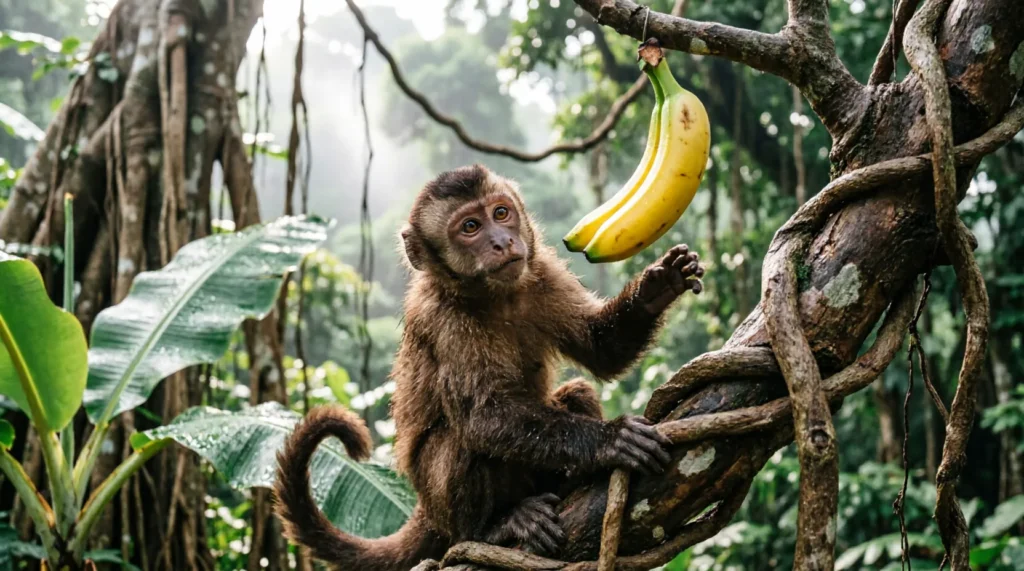
Welcome to the ultimate collection of monkey-themed riddles, headlined by the internet’s most searched primate puzzle. Whether you are hosting a family game night, looking for a clever classroom icebreaker, or just trying to stump your friends on a road trip, this guide has you covered. We have organized the best animal brain-teasers to be easy to scan, complete with tested-in-the-wild insights and every single answer provided.
Top 5 Monkey-Themed Riddles
How do you catch a monkey?
Answer: Climb a tree and act like a banana!
Puzzle-maker note: When I run this one with kids at family game nights, the wrong guess is always something overly logical like “with a net” or “using a banana trap.” The moment they hear the real answer, the absurdity clicks, and they groan-laugh.
What do you call a monkey that loves potato chips?
Answer: A chipmunk!
Puzzle-maker note: My 9-year-old solved this in ten seconds, but adults tend to overthink it and guess “snack monkey.” It is a fantastic confidence-builder for younger solvers.
How do monkeys get down the stairs?
Answer: They slide down the banana-ster!
Puzzle-maker note: This is a staple at elementary school parties. The phonetic play is simple enough for early readers to grasp, making it a reliable crowd-pleaser.
What do you get when you cross a monkey with a holiday?
Answer: A chimpanzee!
Why do monkeys like to eat bananas with the peel on?
Answer: Because they don’t have time to cook!
Puzzle-maker note: I have found that this riddle works best as a rapid-fire follow-up. Once the solver is already in a “monkey food” mindset, the silly logic lands perfectly.
Deep Dive: The “How Do You Catch a Monkey?” Riddle Explained
The headline riddle of this collection is a masterclass in comedic subversion. The setup, “How do you catch a monkey?”, primes the listener’s brain to search for a practical, zoological, or trap-based solution. According to the Wikipedia entry on Riddle, a riddle is a statement or question with a double or veiled meaning, designed to be solved as a puzzle. This specific riddle uses absurdity as its veil.
Instead of the human outsmarting the monkey with technology, strategy, or stealth, the solution requires the human to degrade themselves to the level of the bait. The humor is derived entirely from this role reversal. The listener expects a serious answer, and the punchline delivers a ridiculous visual of a person hanging from a branch, pretending to be a piece of fruit.
When facilitating this riddle in group settings, I always pay attention to the wrong guesses. Adults consistently over-index on realism, suggesting tranquilizer darts, cage traps, or zookeeper assistance. Children under the age of ten, however, are significantly more likely to guess “act like a banana” or something equally absurd. Their imaginations have not yet been boxed in by strict practical constraints, proving that the best riddles often reward lateral, childlike thinking over rigid adult logic. This is why the riddle remains a timeless classic; it temporarily levels the playing field between adults and kids.
Close Variants of the Monkey Catching Riddle
Because the core “how do you catch” structure is so effective, several genuine variants have emerged over the years. These are not just reworded versions of the same joke, but distinct puzzles that test different types of lateral thinking.
How do you catch a monkey in the deep jungle?
Answer: Hide behind a banana tree and make a noise like a peanut!
Puzzle-maker note: This is a brilliant follow-up riddle. If someone just solved the first one, they will immediately look for the “act like a food” pattern. It rewards quick pattern recognition and keeps the momentum going.
How do you catch a unique monkey?
Answer: You use a unique-que!
Puzzle-maker note: This shifts the genre from absurdity to phonetic wordplay. It is genuinely tricky because the listener is still primed to think about physical trapping methods, making the pun catch them completely off guard.
The Fable Variant: How do you catch a monkey with a jar?
Answer: You take a coconut or glass jar, drill a hole just large enough for a monkey’s open hand to fit, and place a banana inside. The monkey reaches in, grabs the banana, and makes a fist. Because the fist is too large to pull back out through the hole, the monkey is trapped. It will not let go of the banana, allowing the catcher to simply walk up and pick it up.
Puzzle-maker note: This is not a joke, but a famous riddle-like parable often used in leadership and mindfulness training. As noted in the Wikipedia article on Monkey, these primates are known for their highly developed hands and problem-solving curiosity, which makes the grasping reflex central to this famous parable. I have used this variant in middle school classrooms to teach mindfulness, and the kids immediately grasp the metaphor of “letting go” to find freedom.
More Tricky Animal Riddles
To round out your collection, here are additional animal-themed riddles that feature their own distinct answers. These are perfect for keeping the puzzle momentum alive after the monkey riddles are solved.
What do you call a bear with no teeth?
Answer: A gummy bear!
Why do fish live in salt water?
Answer: Because pepper makes them sneeze!
Puzzle-maker note: This is a classic misdirection riddle. The solver expects a biological or environmental fact, but the answer relies on elementary kitchen logic. It consistently gets a chuckle from ages 6 to 12.
What do you call a dog magician?
Answer: A labracadabrador!
Puzzle-maker note: This one is a massive crowd-pleaser at pub quizzes. The phonetic stretch is just enough to be challenging, but the “aha!” moment is highly satisfying when it finally clicks.
Why do cows wear bells?
Answer: Because their horns don’t work!
What do you call a lazy kangaroo?
Answer: A pouch potato!
How do you catch a squirrel?
Answer: Climb a tree and act like a nut!
Puzzle-maker note: This is the direct structural cousin to the headline monkey riddle. It tests if the solver has learned the “rule” of the joke and can apply the same absurd logic to a different animal.
What do you get when you cross a snake and a pie?
Answer: A python!
What do you call a pig that does karate?
Answer: A pork chop!
How do you count cows?
Answer: With a cow-culator!
Why don’t elephants use computers?
Answer: Because they are afraid of the mouse!
Puzzle-maker note: I rate this as a genuinely tricky riddle for younger kids who might not immediately connect “mouse” to computer hardware, but it is an instant solve for anyone familiar with basic tech terminology.
How to Use These Riddles
These puzzles are highly versatile tools for engagement. Here are a few proven ways to deploy them effectively:
- Party Icebreaker: Use the Top 5 list as a rapid-fire round when guests first arrive. It immediately lowers social barriers and gets people laughing together.
- Classroom Engagement: The fable variant of the monkey trap is perfect for literature or social-emotional learning discussions about attachment and letting go.
- Road Trip Entertainment: Keep kids engaged without screens by having them take turns being the “riddle master.” The absurd answers guarantee sustained attention.
- Scavenger Hunt Clues: Write the riddles on index cards and hide them around the house or yard. The answer to each riddle can hint at the location of the next clue (e.g., hiding the “gummy bear” riddle near the candy stash).
Frequently Asked Questions
What is a good riddle for kids who love animals? The “chipmunk” and “banana-ster” riddles are perfect starting points. They rely on simple, phonetic puns that elementary-aged children can grasp quickly, building their confidence in wordplay without causing frustration.
How do these riddles work psychologically? They rely on pattern interruption. The human brain expects a logical, practical solution to a “how-to” question. When the answer is absurd, like acting like a banana, it forces a cognitive reset. This sudden shift in perspective triggers humor and makes the riddle highly memorable.
Can the monkey jar story really catch a monkey? While it is a famous parable, wildlife experts note that real monkeys are highly intelligent and would likely abandon the trap, tip it over, or break the container. The story is primarily a metaphorical teaching tool about human attachment and greed, not a verified zoological trapping method.
Are there other animals with similar “catching” riddles? Yes! The squirrel riddle (“climb a tree and act like a nut”) uses the exact same comedic structure. It is a great way to test if someone has learned the underlying rule of the joke and can apply it to a new scenario.

Michelle Williams, a seasoned educator with a background in Mathematics and Philosophy, has been in the realm of riddles for over 15 years. Her journey into the world of brain teasers began in her childhood, influenced by a family that cherished lateral thinking and problem-solving games. At RiddleStack, Michelle combines her pedagogical expertise with her love of puzzles to create content that challenges both mind and logic. Her focus is on integrating educational principles into her riddles, ensuring they are not only entertaining but also intellectually rewarding. Michelle is passionate about making complex concepts accessible, often writing on topics that bridge the gap between logical reasoning and everyday problem-solving. She enjoys sparking curiosity in her readers and inspiring them to think critically and creatively.