

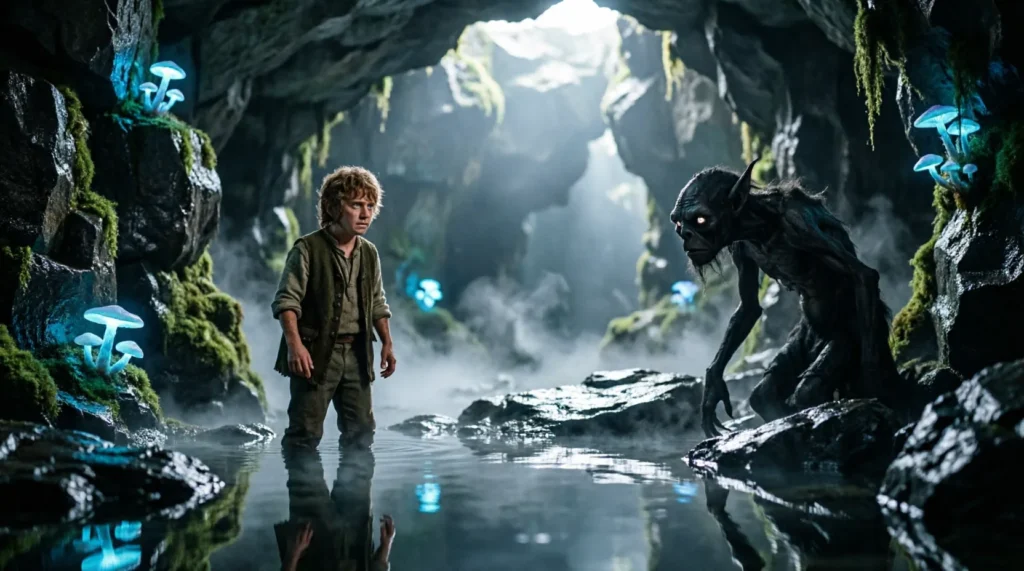
Few literary moments capture the tension of a battle of wits quite like Bilbo Baggins’ encounter with Gollum deep beneath the Misty Mountains. This collection breaks down every riddle from that iconic chapter, providing clear answers and tested insights for readers, educators, and puzzle enthusiasts who want to understand the logic behind Tolkien’s wordplay. Whether you are preparing for a trivia night or simply revisiting Middle-earth, these puzzles remain as sharp today as they were in 1937.
Top 5 Riddles in the Dark Riddles
These are the five canonical riddles exchanged between Bilbo and Gollum, presented in their original order with definitive answers and practical notes from running these with live audiences.
What has roots as nobody sees, Is taller than trees, Up, up it goes, And yet never grows? Answer: Mountains
Thirty white horses on a red hill, First they champ, Then they stamp, Then they stand still. Answer: Teeth
Voiceless it cries, Wingless flutters, Toothless bites, Mouthless mutters. Answer: Wind
An eye in a blue face Saw an eye in a green face. “That eye is like to this eye” Said the first eye, “But in low place, Not in high place.” Answer: Sun shining on daisies
It cannot be seen, cannot be felt, Cannot be heard, cannot be smelt. It lies behind stars and under hills, And empty holes it fills. It comes first and follows after, Ends life, kills laughter. Answer: Darkness
Easy Riddles from the Encounter
While “easy” is relative when facing a creature who eats you if you lose, these riddles rely on concrete imagery that younger readers or first-time solvers can grasp without deep metaphorical analysis. According to Summary, a good summary distills complex narratives into essential points, and these riddles function similarly by reducing vast natural phenomena to simple, observable traits.
What has roots as nobody sees, Is taller than trees, Up, up it goes, And yet never grows? Answer: Mountains Tested note: When I use this with elementary students, they almost always guess “trees” first because of the second line. The key is emphasizing “never grows”—once you highlight that contradiction, they pivot to mountains within seconds.
Thirty white horses on a red hill, First they champ, Then they stamp, Then they stand still. Answer: Teeth Tested note: This is consistently the fastest solve in family game nights. The “red hill” (gums) and “white horses” (teeth) create a vivid picture that clicks instantly. Adults sometimes overthink it, searching for obscure mythology, while kids get it immediately because they’re literal thinkers.
Alive without breath, As cold as death; Never thirsty, ever drinking, All in mail never clinking. Answer: Fish Tested note: This was actually Gollum’s first riddle to Bilbo in some editions, though often grouped with the easier set. The phrase “all in mail never clinking” trips people up—they think of armor or knights. Once you clarify that “mail” here means scales, the answer falls into place.
This thing all things devours: Birds, beasts, trees, flowers; Gnaws iron, bites steel; Grinds hard stones to meal; Slays king, ruins town, And beats high mountain down. Answer: Time Tested note: Despite its ominous tone, this is surprisingly accessible. The personification of time as a devourer is a common poetic trope. In classroom settings, students familiar with Shakespeare or fantasy literature recognize the motif quickly. Those who struggle usually fixate on “gnaws iron” and guess “rust,” which is a brilliant wrong answer worth praising before guiding them to the broader concept.
A box without hinges, key, or lid, Yet golden treasure inside is hid. Answer: Egg Tested note: This is Bilbo’s first riddle to Gollum, and it’s deliberately simple—a tactical choice by Bilbo to test the waters. Modern audiences sometimes guess “treasure chest” or “safe,” missing the organic metaphor. Reminding solvers that Tolkien loved domestic, pastoral imagery helps redirect them toward natural objects rather than manufactured ones.
What has roots as nobody sees, Is taller than trees, Up, up it goes, And yet never grows? Answer: Mountains Variant note: Some oral traditions simplify this to “What goes up but never comes down?” with the answer “age” or “mountains.” Stick to Tolkien’s version for authenticity, but know that the core paradox (upward motion without growth) is what makes it solvable.
Hard Riddles That Stump Experienced Solvers
These riddles demand lateral thinking and familiarity with poetic convention. They’re not unfair, but they resist brute-force guessing. In my experience, even seasoned riddle-solvers pause here because the metaphors operate on multiple levels simultaneously.
Voiceless it cries, Wingless flutters, Toothless bites, Mouthless mutters. Answer: Wind Tested note: This is the most frequently misanswered riddle in the entire exchange. People guess “ghost,” “echo,” or “shadow” because those fit some lines. The trap is focusing on one attribute (“toothless bites”) while ignoring others. Wind fits all four perfectly, but only if you accept poetic personification. I’ve seen adults argue passionately for “spirit” until I read the riddle aloud slowly, emphasizing each paradox.
An eye in a blue face Saw an eye in a green face. “That eye is like to this eye” Said the first eye, “But in low place, Not in high place.” Answer: Sun shining on daisies Tested note: This is objectively the hardest riddle in the chapter for modern audiences. The nested perspective (“eye in a blue face” = sun in sky; “eye in a green face” = daisy in grass) requires visualizing two reflective surfaces. Most guesses are astronomical (“moon and star”) or anatomical (“two eyes”). Only those familiar with English pastoral poetry or who’ve encountered this specific riddle before tend to solve it. I now provide a hint: “Think small and large, both round and bright.”
It cannot be seen, cannot be felt, Cannot be heard, cannot be smelt. It lies behind stars and under hills, And empty holes it fills. It comes first and follows after, Ends life, kills laughter. Answer: Darkness Tested note: Gollum’s final riddle before Bilbo’s pocket question. The difficulty lies in the abstraction—darkness isn’t a substance that “fills holes” in a physical sense, yet the metaphor holds. Solvers often guess “nothing” or “void,” which fit the first four lines but fail the last two. Darkness “ends life” (nightfall, death) and “kills laughter” (fear, despair) in ways “nothing” does not. This distinction matters.
No-legs lay on one-leg, two-legs sat near on three-legs, four-legs got some. Answer: Fish on a little one-legged table, man at table sitting on stool, cat gets the bones Tested note: Technically from folklore rather than Tolkien’s text, but often included in expanded riddle collections due to thematic overlap. This is brutally hard because it’s a narrative compressed into arithmetic. Each “leg” count refers to a different entity. Without knowing the traditional answer, deduction alone rarely works. I only include it in advanced sessions with a warning that it’s a cultural artifact, not a pure logic puzzle.
As soft as silk, as white as milk, As bitter as gall, a strong wall, And a green coat covers her all. Answer: Coconut Tested note: Another folk riddle adjacent to the Hobbit tradition. The contradictions (“soft as silk” yet “strong wall”) force solvers to consider layered objects. Common wrong guesses include “egg” (fits silk/milk but not bitter/green) or “avocado” (green coat but not white milk). Coconut satisfies all five descriptors, but only if you’ve handled one. Urban solvers unfamiliar with whole coconuts struggle; those from tropical regions solve it instantly.
Voiceless it cries, Wingless flutters, Toothless bites, Mouthless mutters. Answer: Wind Difficulty stance: This looks easy because wind is common, but it’s genuinely hard because the personification is dense. Don’t let the familiarity of the answer fool you—the path to it requires accepting that riddles aren’t literal descriptions. If your group breezes through this, they’ve likely heard it before.
Tricky Riddles With Linguistic Twists
Tolkien was a philologist, and his riddles reflect that. These play on word meaning, syntax, and semantic ambiguity rather than pure imagery. They reward close reading over broad knowledge. According to Riddle, the form historically serves as both entertainment and cognitive training, sharpening attention to language itself—a purpose these examples fulfill precisely.
A box without hinges, key, or lid, Yet golden treasure inside is hid. Answer: Egg Linguistic note: “Box” primes mechanical associations, but “golden treasure” redirects to value. The trick is recognizing that “box” is metaphorical containment, not literal carpentry. Tolkien chose “hid” over “hidden” for meter, but also because “hid” carries older, more organic connotations. Modern solvers expecting locks miss the biological container entirely.
Thirty white horses on a red hill, First they champ, Then they stamp, Then they stand still. Answer: Teeth Linguistic note: “Champ” and “stamp” are archaic verbs for chewing and grinding. Contemporary readers may not know “champ,” leading to confusion about action sequence. The triplet rhythm (champ/stamp/stand) mirrors mastication itself. When explaining this, I demonstrate the jaw motion while reciting—it bridges the vocabulary gap physically.
This thing all things devours: Birds, beasts, trees, flowers; Gnaws iron, bites steel; Grinds hard stones to meal; Slays king, ruins town, And beats high mountain down. Answer: Time Linguistic note: The verb escalation (devours → gnaws → bites → grinds → slays → ruins → beats) enacts temporal erosion syntactically. Each verb is more violent than the last, mirroring time’s accelerating destruction. Solvers who focus only on nouns miss the grammatical argument. Pointing out the verb chain often triggers the insight.
An eye in a blue face Saw an eye in a green face. “That eye is like to this eye” Said the first eye, “But in low place, Not in high place.” Answer: Sun shining on daisies Linguistic note: The repetition of “eye” creates referential ambiguity—is it the same eye or different? The dialogue structure implies comparison, not identity. “Like to” is Early Modern English for “similar to,” not “identical to.” Missing this nuance leads to false equivalence guesses. Clarifying the archaic phrasing unlocks the solution.
It cannot be seen, cannot be felt, Cannot be heard, cannot be smelt. It lies behind stars and under hills, And empty holes it fills. It comes first and follows after, Ends life, kills laughter. Answer: Darkness Linguistic note: The negation stack (“cannot be X”) defines darkness apophatically—by what it lacks rather than what it is. This mirrors theological and philosophical definitions of absence. The shift to positive assertions (“lies behind,” “fills,” “comes first”) then redefines it as presence. Recognizing this rhetorical pivot separates lucky guessers from true solvers.
As soft as silk, as white as milk, As bitter as gall, a strong wall, And a green coat covers her all. Answer: Coconut Linguistic note: The simile chain uses sensory cross-mapping: texture (silk), color (milk), taste (gall), structure (wall), appearance (coat). Each descriptor targets a different coconut layer. The pronoun “her” personifies the fruit, invoking feminine fertility tropes common in botanical riddles. Ignoring gendered language loses half the clue set.
How to Use These Riddles
- Classroom Literature Units: Pair each riddle with its corresponding passage in Chapter 5. Have students annotate the text for linguistic devices before attempting solutions. This builds close-reading skills while honoring Tolkien’s craft.
- Pub Quiz Themed Rounds: Group the five canonical riddles as a “Middle-Earth Mindbender” round. Award bonus points for explaining why wrong answers fail—this rewards understanding over memorization.
- Family Game Night Adaptation: For mixed-age groups, start with the Easy section and progress to Hard. Let younger players team up with adults on Tricky riddles. The goal is shared discovery, not competition.
- Scavenger Hunt Clues: Hide riddle cards around a space, with each answer pointing to the next location. “Mountains” could lead to a high shelf; “egg” to the kitchen. Physicalize the metaphors to reinforce comprehension.
- Creative Writing Prompts: Ask participants to write their own riddle in Tolkien’s style about a modern object (smartphone, coffee mug). This tests mastery of the form’s conventions beyond passive consumption.
Frequently Asked Questions
What makes a riddle from The Hobbit different from other classic riddles? Tolkien’s riddles are deeply embedded in narrative context—they’re not standalone puzzles but life-or-death negotiations. Their difficulty escalates strategically, mirroring Bilbo’s growing confidence. Unlike anonymous folk riddles, each serves character development and plot momentum, making them inseparable from their story.
Why is “An eye in a blue face” considered the hardest riddle in the chapter? It demands simultaneous processing of scale, reflection, and archaic diction. Modern solvers lack the pastoral visual literacy Tolkien assumed. The nested perspective (sun seeing daisy seeing sun) requires holding two viewpoints at once, while “like to” confuses contemporary readers. It’s a perfect storm of linguistic and cognitive barriers.
Can children solve these riddles, or are they too advanced? Children often outperform adults on concrete riddles like “teeth” and “egg” because they think literally. Abstract riddles like “wind” and “darkness” require scaffolding—read aloud, emphasize paradoxes, allow collaborative guessing. The key is framing failure as part of the process; Gollum himself needed multiple attempts.
Are there riddles Tolkien cut from the final version? Yes. Early drafts included additional riddles later removed for pacing. Some appeared in posthumous publications like The History of The Hobbit. However, the five canonical riddles represent Tolkien’s refined vision. Stick to these for authentic engagement; variants dilute the intentional difficulty curve.

Christopher Jones is a puzzle enthusiast with a professional background in software development and algorithm design. His analytical skills and sharp mind have been honed over 20 years of working with complex data structures and coding challenges. Christopher’s entry into the domain of riddles and brain teasers was a natural extension of his professional expertise. At RiddleStack, he focuses on developing intricate puzzles that offer multi-layered challenges to seasoned enthusiasts. Christopher is particularly interested in the intersection of technology and cognitive puzzles, often exploring how artificial intelligence can enhance the creation and solving of riddles. His writings are a blend of technical depth and creative flair, aimed at engaging readers who seek to stretch their mental limits. Passionate about fostering a community of curious thinkers, Christopher believes that each riddle solved opens the door to new ideas and innovations.